Guide · 14 min read
Furniture Delivery Day Checklist: What to Inspect Before You Sign
A field checklist for U.S. furniture delivery day — service levels from curb to white-glove, ROC explained, inspection steps before you sign, and how to protect a damage claim with photos and paperwork.

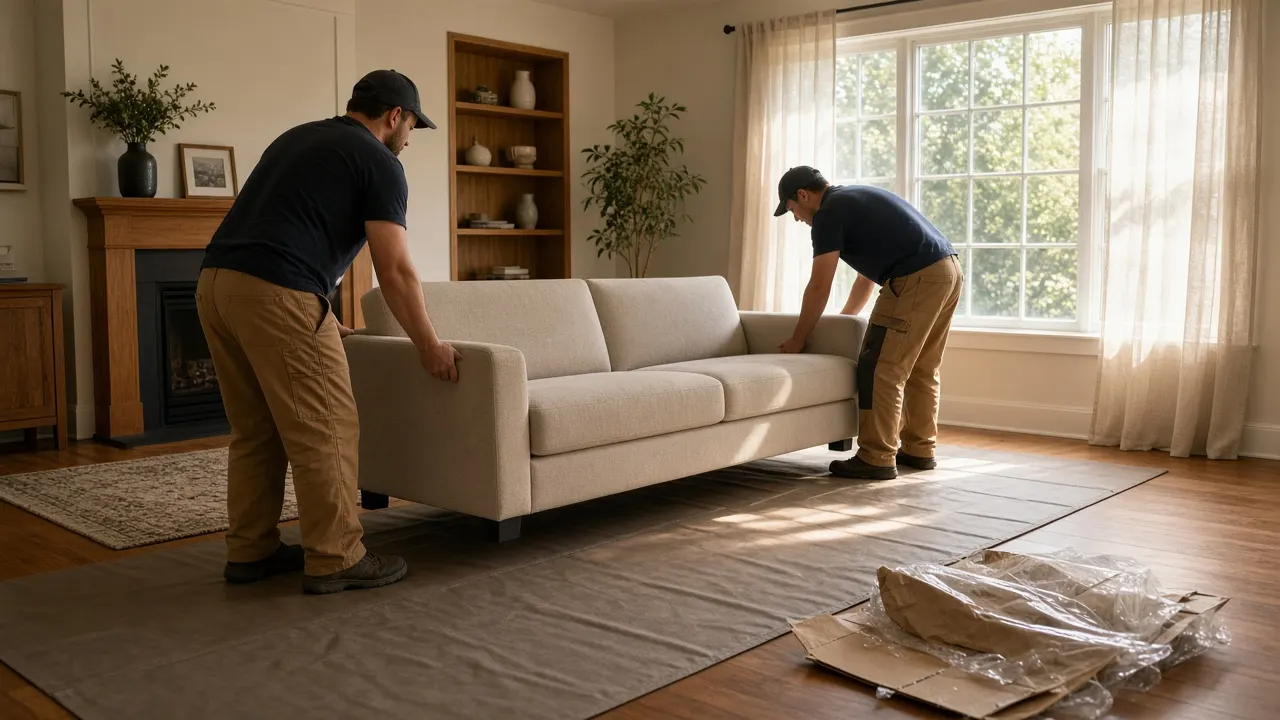
Delivery day is won or lost in the minutes before you sign — not in the customer-service chat that follows.
Furniture delivery day is the one appointment where a five-minute habit protects a four-figure purchase. The truck is already late, the crew is on a route clock, and the tablet is waiting for your signature. That signature is not a courtesy — it is the carrier’s record that the shipment arrived in the condition you accepted. Sign clean when it is not clean, and you have handed away the easiest version of a damage claim.
Know your service level before the truck arrives. Clear the path. Count cartons. Photograph everything in daylight. Write specific damage on the receipt before you sign. Keep packaging until the retailer’s claim window closes — often 24 hours to 7 days for retailers, and commonly five business days for concealed freight damage.
What Does ROC Mean in Furniture Delivery?
If a tracking update, checkout option, or carrier email says ROC, it usually means room of choice. The crew brings the piece past the threshold and into the room you designate — living room, bedroom, upstairs office — rather than leaving it at the curb or just inside the front door. Stairs are often included within a stated flight limit; unpacking and assembly usually are not.
There is a second, logistics-side meaning that confuses searchers: some carriers use ROC for a Regional Operations Center that coordinates final-mile scheduling. If ROC appears next to a city hub or appointment call rather than as a paid service line, ask customer service which definition they are using. For most furniture shoppers comparing delivery upgrades at checkout, ROC means room of choice.
Furniture Delivery Types: Curb to White-Glove
Delivery is a ladder, not a single product. Each rung moves the piece farther into the house and finishes more of the work. Matching the rung to the piece — weight, stairs, assembly, value — matters more than the marketing name on the checkout page.
| Level | Where it stops | Usually includes | Usually excludes |
|---|---|---|---|
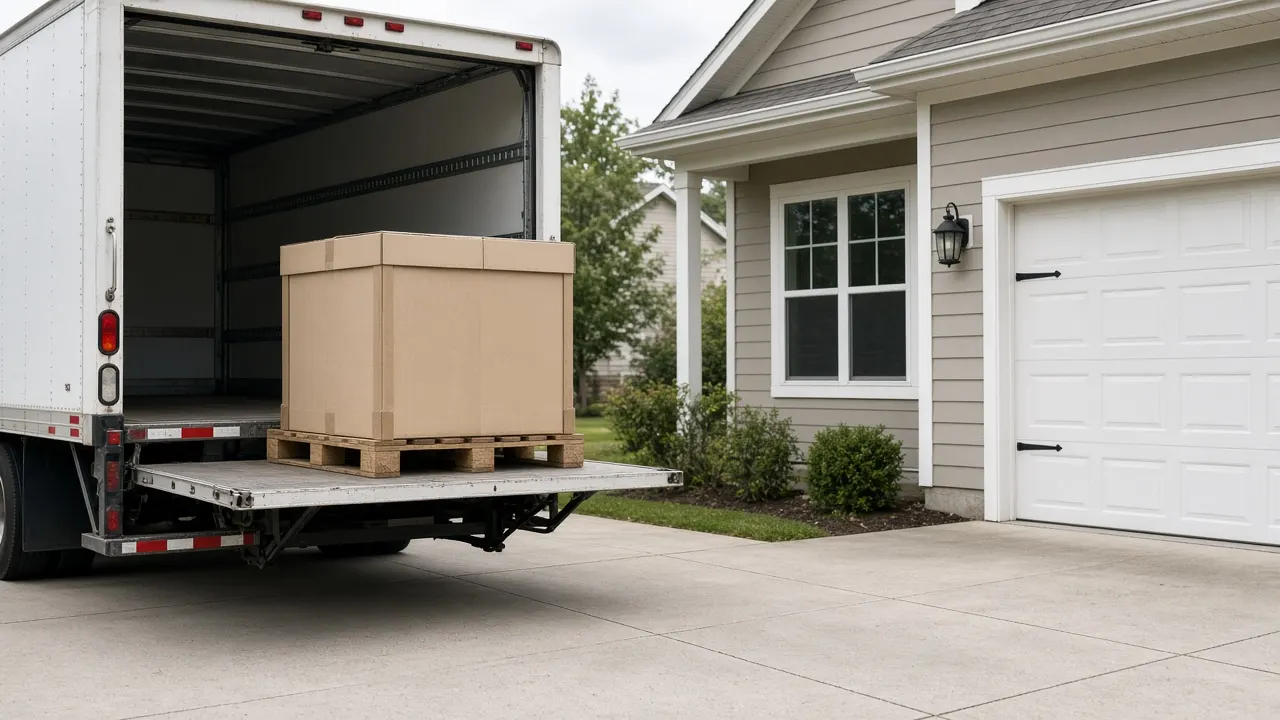
| Curbside / liftgate | Curb, driveway, or property edge | Unload from truck; often liftgate to ground | Indoor carry, stairs, unboxing, assembly |
| Threshold | First dry entry (door, garage, lobby) | Carry just inside, out of weather | Room placement, stairs (often), assembly |
| Room of choice (ROC) | The room you name | Indoor carry; stairs when path allows | Unpacking, assembly, debris removal |
| White-glove / in-home | Final placement in the room | Unpack, assemble, place, remove packaging | Haul-away (often paid add-on); complex installs |
Exact inclusions vary by retailer and carrier. Confirm stairs, flight limits, and haul-away in writing before delivery day.
Furniture Delivery Timeline: What to Expect
“When will it get here?” is really three clocks stacked together: warehouse processing, line-haul or parcel transit, and final-mile appointment scheduling. Treating them as one number is how a “two-week” order becomes a six-week wait without anyone lying to you.
| Stage | In-stock estimate | Made-to-order / custom |
|---|---|---|
| Order processing & warehouse pull | 1–3 business days | Built into production lead time |
| Ship after payment / confirmation | 3–7 business days common | 6–14 weeks typical; some fabrics longer |
| Transit to local hub | 2–7 days depending on distance | Same once the piece actually ships |
| Final-mile scheduling window | Often 1–3 weeks after hub arrival | Same; popular weeks book out |
| On-site appointment length | Multi-hour window; 20–90 min indoors | Longer for sectionals and multi-piece sets |
Retailer pages that say “ships in 3–5 days” usually mean warehouse release, not the day it lands in your living room. Read the scheduling email after the tracking number appears.
The Night Before: Path, Access, and Paperwork
Most failed deliveries are not product failures. They are path failures — a sofa that clears the living room but not the stair turn, a dresser wider than the elevator, a crew that cannot park because the driveway is full. Fix those the night before, while you still have time.
- Re-read the order confirmation: SKUs, finishes, configuration (left/right chaise), and the exact delivery level you paid for.
- Measure the path with boxed dimensions, not assembled ones — cartons are often taller and deeper than the finished piece.
- Clear a continuous lane from the truck to the room: rugs, lamps, shoes, strollers, and anything that forces a pivot against a wall.
- Protect floors and tight corners with runners, blankets, or cardboard the crew can use without hunting for supplies.
- Corral pets and kids; unlock gates, elevators, and building loading docks; have codes and parking instructions ready.
- Charge your phone, open a notes app, and set out a pen plus printed packing list if you have one.

Furniture Inspection Before You Sign
Search results sometimes blur “furniture inspection before shipping” with the check you do at home. Those are different jobs. The factory or warehouse may photograph and QC a piece before it ships; that protects the seller’s outbound record. Your job starts when the truck arrives. The only inspection that reliably protects your claim is the one you document before you sign the delivery receipt — and, for boxed freight, again within the concealed-damage window after you open the carton.
Inspection is not optional courtesy toward a hurried driver. It is how you create a contemporaneous record. Freight and final-mile teams work on route time; you work on evidence. You are allowed to take the minutes you need.
By delivery type
- White-glove: Inspect after unpacking and placement, before signing. Surfaces, seams, drawers, mechanisms, and stability should all be checked in the room.
- Room-of-choice: The piece may still be boxed. Inspect carton exteriors carefully; open anything crushed, punctured, or water-stained while the crew is present if policy allows.
- Threshold or curbside: Photograph pallets and cartons from all sides before the truck leaves. Note exterior damage even if you cannot fully unbox on the driveway.
- Parcel (UPS/FedEx-style): Signature may not be required. Photograph the package the moment you find it, then open promptly and file within the retailer’s window.
The photograph sequence that wins claims
- Wide shots of the piece or pallet from multiple angles, in daylight if possible.
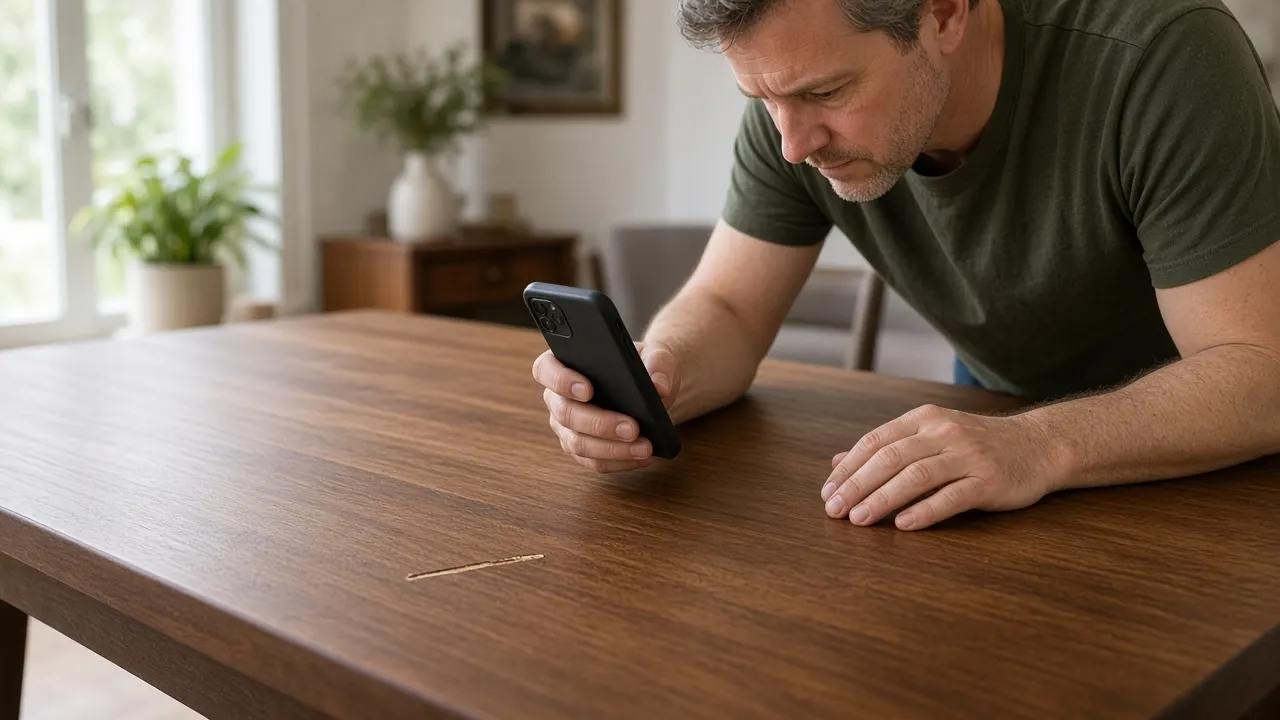
- Close-ups of every defect with a finger or ruler for scale.
- Packaging damage: crushed corners, punctures, torn wrap, water stains, footprints on cartons.
- Shipping labels, barcodes, and order numbers visible on the box.
- The signed delivery receipt or tablet screen showing your written exceptions.
- Optional: a slow walk-around video narrating what you see — timestamped and hard to dispute.
What to Check by Furniture Type
A sofa and a dining table fail in different places. Use the piece-specific pass below after the general carton count, then circle back for anything you skipped because the crew was assembling.
| Piece | Must-check | Refuse or escalate if |
|---|---|---|
| Sofa / sectional | Arms, corners, seams, cushions, under-cushion deck, legs, connectors, configuration | Frame rack, large tear, wrong chaise side, missing section |
| Case goods (dresser, desk) | Top and corners, drawer glide, door alignment, finish consistency, hardware kit | Warped case, cracked panel, drawers that bind hard |
| Dining table / chairs | Top scratches, edge chips, base stability, leaf fit, chair legs and joints | Split top, broken leg, glass damage, severe wobble |
| Bed / mattress | Mattress stains or tears, foundation damage, hardware, headboard finish | Torn cover, bent rails, missing critical hardware |
| Upholstered chairs | Fabric match, seam integrity, seat deck, legs tightened | Wrong fabric, open seam with fill showing |
Sit, open, level, and operate every moving part before the crew leaves. Minor finish flaws can be repaired; structural defects should not be “lived with” while you wait for a vague email reply.
How to Note Damage on the Bill of Lading
The bill of lading (BOL) or proof of delivery is the legal snapshot of condition at handover. A clean signature generally means you accepted the freight in good order. Vague language such as “subject to inspection” is weak; specific exceptions are strong.
- Good: “Carton 3 of 4 — crushed front-right corner; tabletop edge scratch ~6 in. on left side. Photos taken.”
- Good: “SHORT 1 carton — packing list shows 5, received 4. Driver present.”
- Weak: “Damaged” with no location or carton number.
- Weak: Signing “received in good condition” while planning to email photos later.
If the driver cannot wait for a full unbox, write that fact on the receipt and have them acknowledge it, then photograph exteriors thoroughly and open the same day. Freight advice from carriers and retailers is consistent on one point: no note often means no easy claim for visible damage.
Concealed Damage and Claim Windows
Concealed damage is the defect you could not see until the carton came off — cracked panel behind perfect cardboard, stain under plastic wrap. It is harder to prove because the carrier can argue the damage happened after delivery. Your job is to shrink that argument: unpack promptly, keep packaging, photograph in place, and report in writing inside the stated window.
| Situation | Typical window | What to do |
|---|---|---|
| Visible damage at delivery | Note on receipt immediately | Photograph, describe specifically, then file with retailer same day |
| Retailer concealed-damage policy | Often 24 hours–7 days | Check order email; unpack early even if assembly waits |
| LTL / common-carrier concealed damage | Often 5 business days | Report in writing, request inspection, retain packaging |
| Formal freight claim filing | Up to 9 months in many U.S. cases | Still report discovery ASAP — late discovery weakens proof |
Windows are set by retailer contract and carrier tariff. Always use the deadline printed for your order if it is shorter.
After the Truck Leaves: Filing Without Drama
Open the claim while details are fresh. Emotion does not move claims teams; a numbered description does. Include order number, delivery date, whether damage was noted at delivery, preferred resolution, and attachments.
- Email or portal file the same day when damage is visible; within 24–48 hours for anything found on unboxing.
- Attach wide shots, close-ups, packaging shots, and the annotated receipt.
- Ask for repair, replacement, partial refund, or full refund — then be ready for the retailer to propose one of those paths.
- Do not discard packaging or attempt irreversible repairs until the claim is accepted or packaging release is confirmed.
- Save every ticket number and chat transcript; follow up in writing if a phone agent makes a promise.
| Stage | Common timeframe | What happens |
|---|---|---|
| Claim submitted | Day 0 | Photos and description enter review |
| Initial review | 1–3 business days | Validity and severity assessed |
| Resolution offered | 3–7 business days | Repair, replace, refund, or goodwill discount |
| Replacement ships | 1–8+ weeks | Stock vs. made-to-order drives this hard |
| Refund posts | 5–10 business days after approval | Original payment method |
Custom upholstery replacements re-enter the production queue. A “quick claim” can still mean a long wait for the new piece.
Mistakes That Cost People Weeks
- Assuming “free delivery” means white-glove placement and assembly.
- Signing the tablet while the crew is still unwrapping “to save time.”
- Writing only “damaged” with no carton number, location, or size.
- Discarding crushed cartons the night of delivery.
- Waiting a week to unbox because the room “isn’t ready.”
- Letting a friend accept the delivery without the order list or photo plan.
- Skipping a path measure and discovering the sectional will not clear the stair on delivery day.
The calmest delivery days look almost boring from the sidewalk — clear path, charged phone, specific notes on the receipt. That boredom is the point.
— Emir Muhić, Kotro Home
Furniture delivery day rewards preparation more than luck. Know whether you bought curb, threshold, ROC, or white-glove. Clear the path. Inspect like the claim depends on it — because it does. Sign only after the piece in front of you matches the order you paid for.
Frequently asked questions
What does ROC mean in furniture delivery?
ROC almost always means room of choice: the crew carries the piece into the room you name, often including stairs when the path is safe. It usually does not include unpacking, assembly, or debris removal — those belong to white-glove. On some carrier paperwork (for example certain J.B. Hunt contexts), ROC can also refer to a Regional Operations Center that schedules deliveries; if you see ROC on a tracking note rather than a service line item, ask which meaning applies.
What should I inspect before signing for furniture delivery?
Count cartons against the bill of lading, photograph packaging, then check every visible surface for scratches, dents, tears, stains, and finish defects. Open drawers and doors, sit on upholstery, level tables, confirm legs and hardware are present, and compare color, size, and configuration to your order. Note any problem on the delivery receipt with a specific description before you sign.
How long does furniture delivery usually take?
In-stock pieces commonly ship within 3 to 7 business days; final-mile scheduling often adds another 1 to 3 weeks after the item leaves the warehouse. Made-to-order and custom upholstery routinely run 6 to 14 weeks from order to delivery. Expect a multi-hour arrival window on delivery day, not a precise clock time, and plan to be home for the full window.
What is the difference between threshold and room-of-choice delivery?
Threshold delivery brings the item just inside the first dry entry — front door, garage, or lobby — and stops there. Room-of-choice (ROC) carries it to the specific room you choose. Neither tier automatically unpacks or assembles; only white-glove reliably adds unboxing, assembly, placement finish, and packaging removal.
Should I refuse damaged furniture or accept it and file a claim?
Refuse when damage is structural or severe — cracked frame, shattered glass, large upholstery tear, or a piece that cannot be used safely. For freight shipments with minor carton damage only, many retailers prefer you note the exception on the bill of lading, accept the freight, photograph everything, and open a claim immediately rather than refuse the whole truck. Ask the retailer which path they want before delivery day if the order is high-value.
How long do I have to report concealed furniture damage?
Retailer windows often run 24 hours to 7 days from delivery. For LTL freight under common carrier rules, concealed damage is typically expected to be reported within five business days, though some carriers still publish longer windows in their own tariffs. Unpack within a day or two even if you will not assemble yet, keep all packaging, and confirm the exact deadline in your order emails.
What should I write on the delivery receipt if something is damaged?
Write a specific exception, not a vague phrase. Example: “Received damaged — 6-inch scratch on left tabletop edge; carton 2 crushed corner.” Photograph the signed receipt. Avoid relying on “subject to inspection” alone; carriers and retailers often treat a clean signature as acceptance in good order.
Does white-glove furniture delivery include haul-away of my old sofa?
Not automatically. Haul-away is a common paid add-on, not a default white-glove inclusion. Confirm whether old-item removal is on your order, whether the piece must be emptied and detached, and whether mattresses have sanitation rules. If haul-away is missing, arrange it separately before delivery day so the room is clear.
- furniture delivery day
- furniture delivery checklist
- furniture inspection
- white glove delivery
- room of choice delivery
- ROC furniture delivery
- furniture delivery timeline
- bill of lading
- concealed damage
- threshold delivery
Related guides
- How to Measure for a Sofa: Depth, Room Size & Doorways
The complete sofa measuring guide for U.S. homes — overall dimensions, seat depth, diagonal depth for doorways, room clearances, and the delivery-path checks that stop returns.
- Dining Table Size Guide: How to Choose the Right Size for Your Room
A practical, measurement-first guide to dining table size, with seating charts, clearance rules, and the room math that tells you exactly how big you can go.
- Small Apartment Furniture: What Actually Fits
A clearance-first furniture guide for U.S. studios and one-bedrooms — sofa width and depth, 30–36 inch walkways, round tables, elevator limits, and the pieces that earn their footprint.