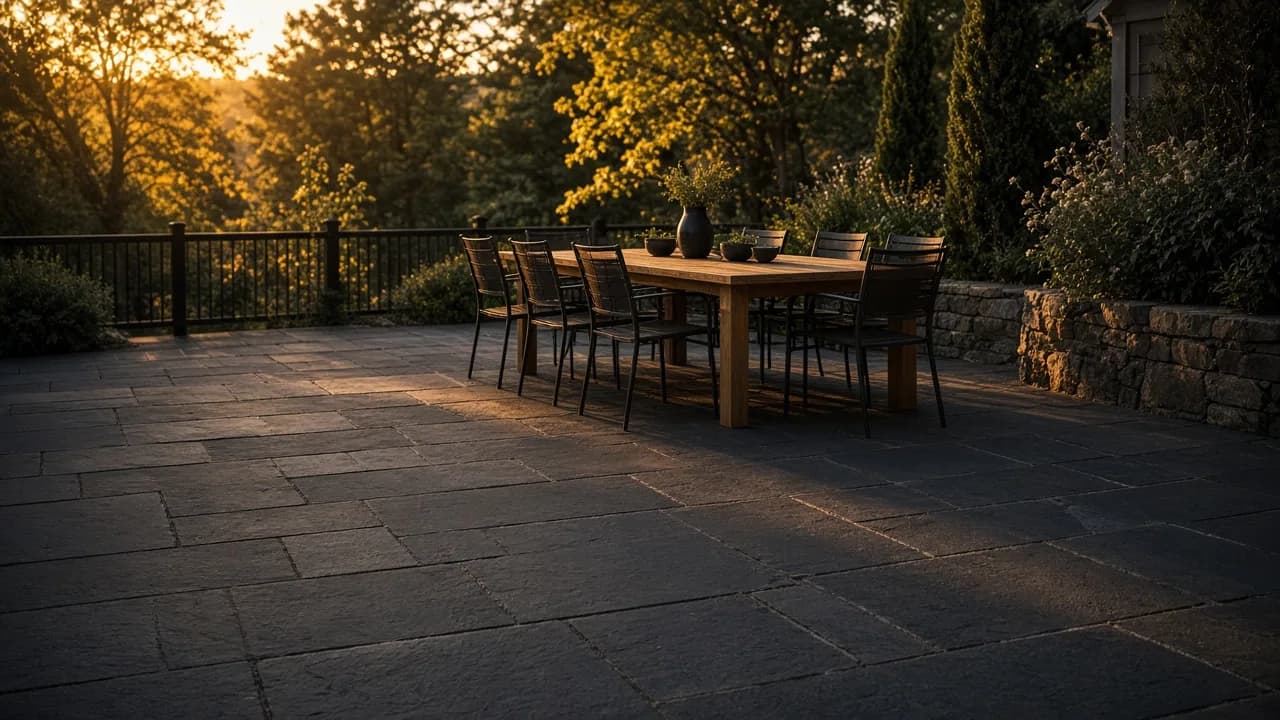

The empty stone in front of the table is the room. The table in the catalog photo is not.
The set looked small in the photo. Chairs were pushed in, the umbrella was folded in the corner of the frame, and the deck in the background had no rail you could trip over. You measured the tabletop. It fit. The first guest stood up, the chair back left the pavers, and someone with a plate had to wait. That is the usual patio furniture layout failure. The table was never the thing that needed the floor.
Give a rectangular table 42 inches to the edge of the slab so a person can stand. A walk behind that person still wants 42 to 48 inches of boards, not grass. Bench the house side if the deck is only 8 feet deep. Buy the shade before the pale cushions. Frames and fabrics belong in the outdoor materials guide. This page is the floor.
Measure the chairs pulled out
Amy, a landscape designer at Pretty Purple Door, filmed the mistake she sees most in December 2024: patios poured too small for the furniture that was going to sit on them. Her rule of thumb is specific. A rectangular or square table with chairs needs a minimum of 42 inches from the table edge to the patio edge, enough to pull the chair and get out of the seat. A round table can come in at about 40 inches. A table with no chairs, just a surface people walk past, wants 24 inches. Those are stand-up numbers. They are not a serving lane.
The indoor dining guide uses 36 inches from the table edge, and that number is right for a room that still has floor behind the chair. A pulled-out chair already eats 18 to 24 inches of it. What is left is about a foot. Workable against a wall. Not a path. On a deck, that leftover foot is often air. The rail, the grass, or a six-inch drop is the end of the usable floor. Amy's 42 inches to the slab edge is the outdoor version of standing up. If a guest has to pass behind someone who is seated, you are back to the dining guide's 42 to 48 inches, and every inch of that has to be pavers or boards. The lawn past the coping does not count, even if the catalog called it a yard.
| What is happening | Hold | What you actually get |
|---|---|---|
| Chair pull-out only, indoor floor behind | 36 in. | Sit. Standing room is thin. |
| Rectangular table to the slab edge | 42 in. | Stand up. Chair stays on the pavers. |
| Round table to the slab edge | 40 in. | Same job, slightly less, no corners. |
| Walk behind a seated guest | 42–48 in. | One person with a plate. Must be floor. |
| Door, grill, or serving side | 48 in. and up | Hot pan, not a sideways shuffle. |
| Pass a table that has no chairs | 24 in. | A walk, not a seat. |
| Two people, groceries, or a stroller | 48 in. (4 ft) | Shoulder to shoulder on a main path. |
Thirty-six inches is also the ADA accessible-route clear width in public buildings. A private deck is not that project. Use 36 as the width one person needs, not as a backyard code citation.
Hinkle's senior hardscape designer still has the right method: find a house corner, count feet off it, mark the far edge with paint, a hose, or flags. Then put a real chair at the tightest seat and pull it out. Emily, who opens that layout video, cares whether the patio fits the furniture you mean to buy, not whether the sketch looks generous. If the slab is already there, skip the spray paint. Tape the tucked table, then a second line 18 to 24 inches out. Walk it with a plate.
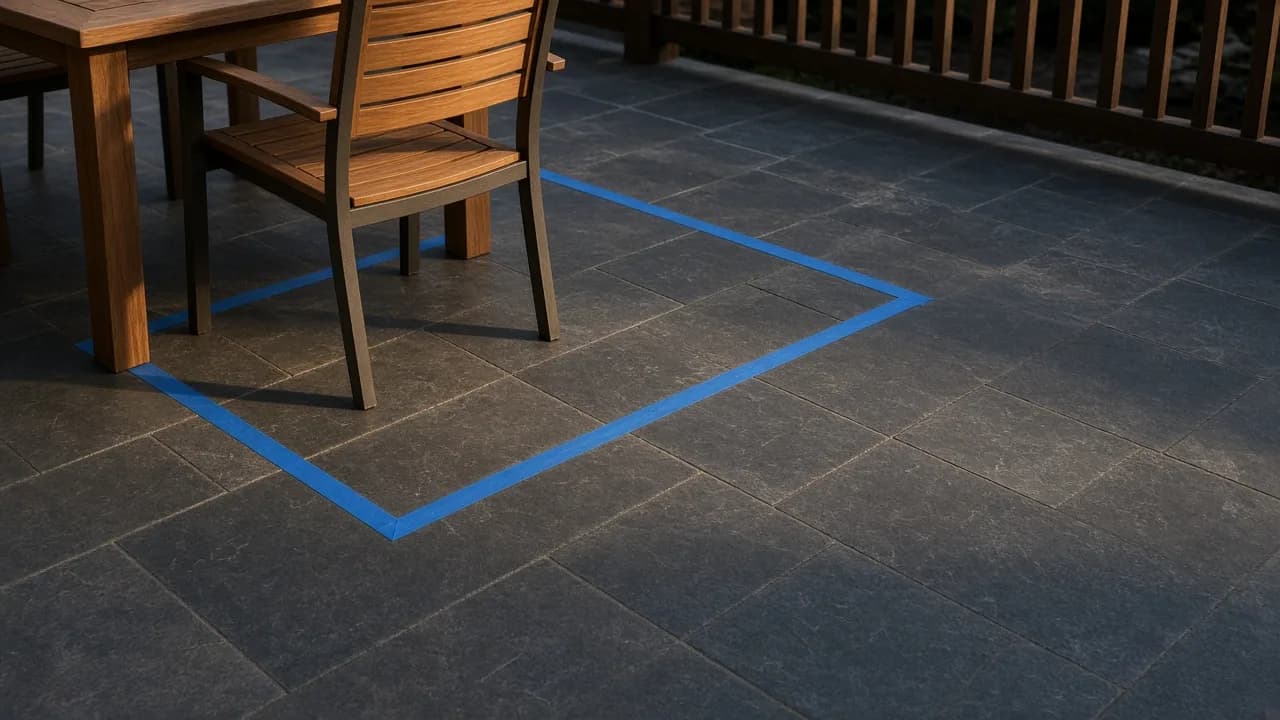
An 8-foot deck cannot host both sides
A 72 by 36 inch table is the usual six-seat rectangle. Depth is the number that breaks decks. Thirty-six inches of top, plus 42 inches to stand on each long side, is 120 inches. Ten feet. An 8-foot deck is 96 inches. You are two feet short before anyone walks, and that assumes the rail is the edge, not a chair back hanging past it. A 48-inch round is not the escape it looks like in a photo. Forty-eight plus 40 plus 40 is 128 inches, about 10 feet 8 inches, if people sit all the way around and still stand. The round table saves corners. It does not save a shallow deck.
Julie Khuu's fix for a narrow dining room is the same trick on a deck. A bench against the wall saves the aisle on that side, because nobody walks behind it. She treats 36 inches as the typical passage and drops to 30 only in a small apartment. Bench the house wall. Depth becomes the bench, about 18 inches, plus a 36-inch top, plus 42 inches on the yard side. That is 96 inches. An 8-foot deck can eat if nobody passes behind the chairs. The grill path behind them puts you over 10 feet again. Armless chairs tuck cleaner. Armchairs need the 28 to 30 inches of edge the dining guide already uses.
The door swing and the grill are walls
A sliding door is a wall that moves. The track and the swing arc are occupied floor even when the door is open. Tape the arc with the furniture in the tape, not after. A chair that kisses the slider every time someone comes out with a tray will be moved, and then the 42-inch zone you planned is gone. Amy's other number belongs here: a high-traffic walk, the one to the door with groceries or a second person, wants about 4 feet so two people can pass shoulder to shoulder. A secondary garden path can be tighter. The line from the kitchen to the table is not a secondary path.
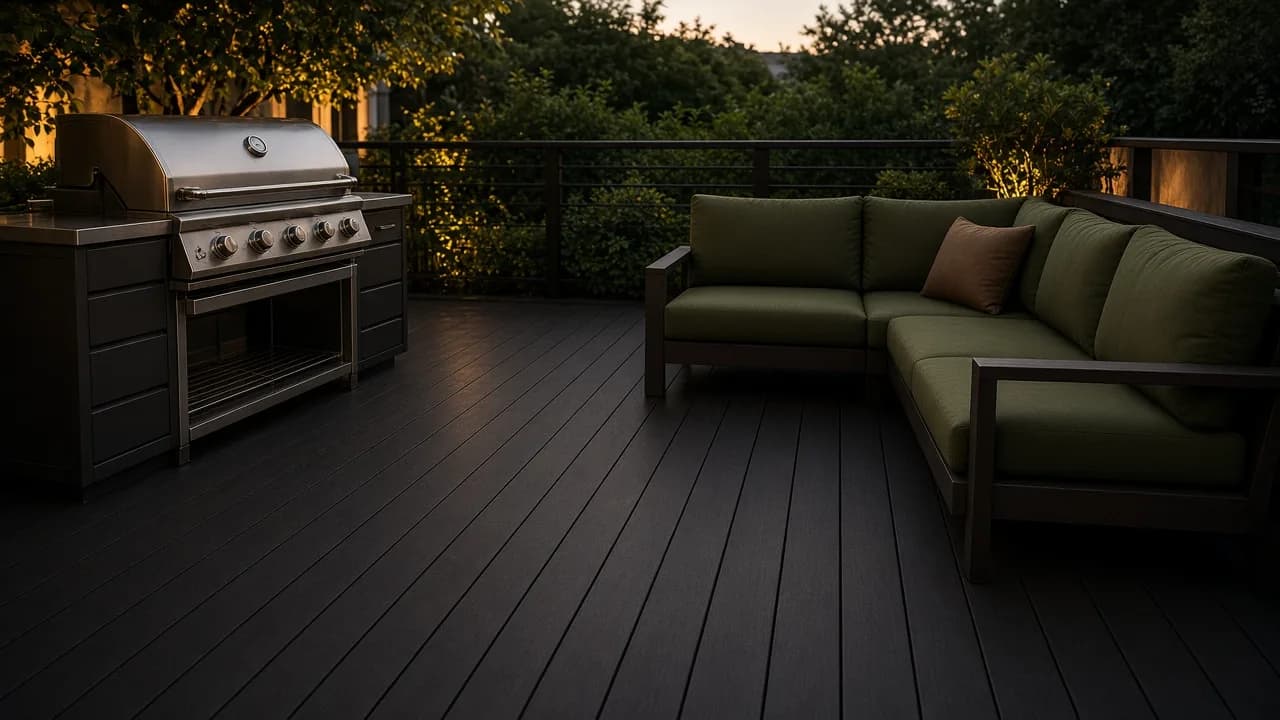
Grill rules split, and apartment photos mix them. NFPA 1 section 10.10.6.1 applies to buildings other than one- and two-family houses: no hibachi, grill, or similar device used or kindled on a balcony, under an overhang, or within 10 feet of a structure. Section 10.10.6.2 says you do not store one there either. Nashville's fire marshal restates that text. Some jurisdictions allow a listed electric tabletop grill of 200 square inches or less. A house deck is not that ban. Cushions still do not belong in the lid's heat, and the manual beats a patio photo. A 20-pound propane tank is not a balcony object in multifamily housing. An HOA can be stricter than the fire code.
Shade first, then the base
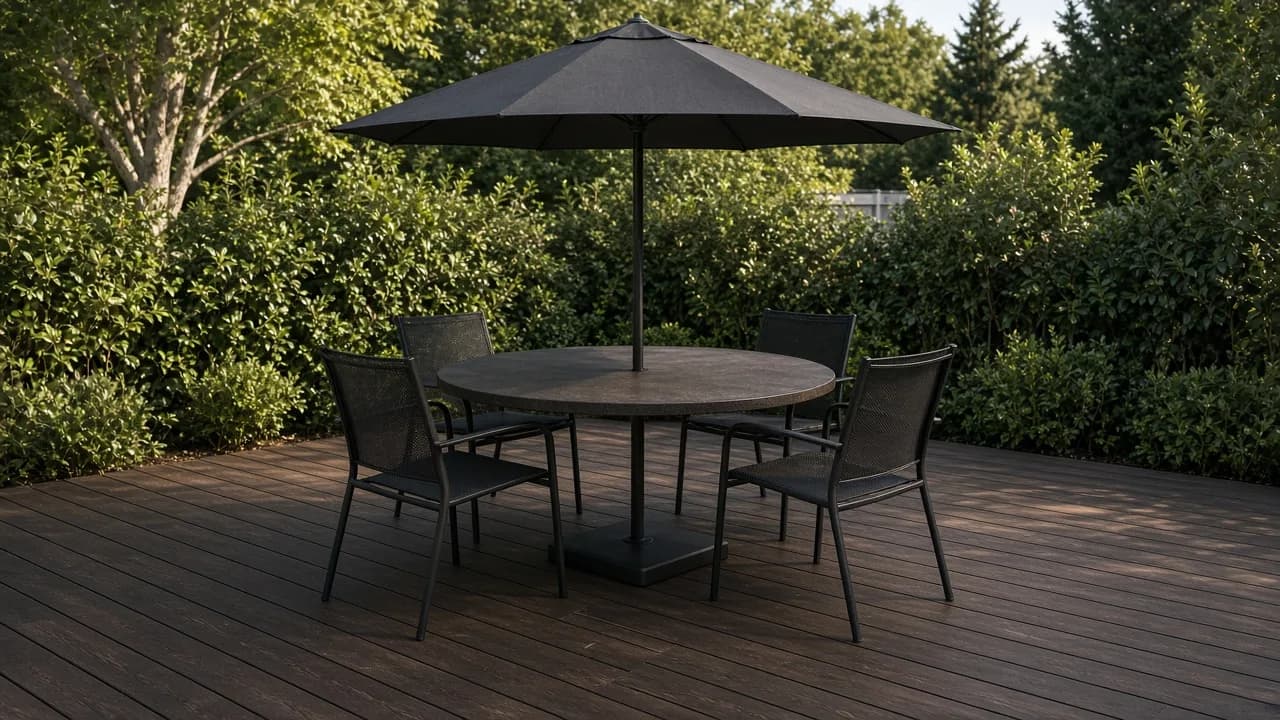
Dia, an interior designer with more than 25 years in the work, put sun protection ahead of the trendy chair in a May 2024 video. Find the shade you already have, or add an umbrella or a pergola, before you commit to pale cushions that will live in full afternoon sun. Wind is the other half of that sentence. A lattice or a slat screen beats a lightweight chair that becomes a sail. The materials guide covers teak, aluminum, HDPE, and solution-dyed covers. Layout only cares that the shade lands on the seats, not just the center of the table, and that the thing holding it up does not tip into the slider.
Use the base weight the umbrella maker prints for that canopy and that mount. A planning figure used by retailers is about 10 pounds of base per foot of canopy in a sheltered spot, so a 9-foot center-pole umbrella wants about 90 pounds, more if the deck is exposed. A pole through a sturdy table can use less, because the table braces the side load. A cantilever is a lever: 150 to 250 pounds, or a bolt-down, and a cross base beats a small round foot of the same weight. None of that is a wind rating. Close the canopy when you leave. Offset umbrellas have tipped in ordinary wind. More weight is not a reason to leave one open.
IRC Table R301.5 sets decks at 40 pounds per square foot of uniform live load. The 2009 code dropped the older split that had balconies at 60. Some states, Minnesota among them, kept 60 for exterior balconies. Forty psf is a load spread across the floor. A 200-pound cantilever base on a few square inches is a point load. Confirm it before it goes on a balcony, where wind is also stronger. A cross base that reaches joists is the kinder install. A hot tub is not outdoor furniture and does not borrow this math. On wood decks, IRC R507.1 also takes the greater of that live load or the ground snow load.
A conversation set that does not own the door
A coffee table wants about 14 to 18 inches off the front of the seat, close enough for a glass, far enough that knees are not the armrest. An ottoman in the door path, or a sectional whose back eats the 36 inches one person needs to pass, fails the same test as a dining chair off the slab. Dia's note is the blunt version: open space is as important as sitting space. A sofa along the long edge, facing the view, anchors the zone. Two chairs and a loveseat beat one sectional that blocks the grill. If a person has to step over someone to pass, the set is too big.
A balcony is a patio with a fire rule and a point-load problem. Measure rail to slider, then subtract the door. If 42 inches does not remain on the chair side, a dining set that needs it is the wrong purchase. A 30-inch bistro with stackable chairs, or a bench against the house, still lets the door open. Chair legs stay on the deck, not through the balusters. Lightweight aluminum is easy for wind to move. Heavier frames stay. Which metal and which fabric is the materials guide. Here, the question is whether the piece will still be there after a storm, and whether the building allows the weight.
Tape the chairs pulled out. If the tape leaves the boards, buy less table or bench one side. Forty-two inches to the slab edge gets someone out of the seat. Forty-two to 48 of real floor gets a plate past them. Shade before the cushions, and close the umbrella when you go in. The climate chart will not rescue a set that only fit in the photo.
Frequently asked questions
How much space do you need around an outdoor dining table?
Plan 42 inches from the edge of a rectangular table to the edge of the patio so a chair can pull out and a person can stand. Amy, a landscape designer at Pretty Purple Door, uses that 42-inch figure, and 40 inches for a round table. Thirty-six inches, the indoor dining number, assumes there is still floor behind the chair. On a deck, past the slab is grass, a drop, or a rail. If someone must walk behind a seated guest, hold 42 to 48 inches of actual floor, the same traffic number as the dining table size guide.
What size patio do you need for a six-person dining set?
A common 72 by 36 inch table with chairs on both long sides wants about 10 feet of patio depth: 36 inches of table plus 42 inches to stand on each side. An 8-foot deck is 96 inches and comes up short by about two feet before anyone walks. Length needs the 72-inch top plus stand-up room at the ends, or a bench on the house side so one long side does not need 42 inches. Tape both footprints. Seat width, 24 inches of edge per person, lives in the dining table size guide.
Can you put a grill on an apartment balcony?
In buildings that are not one- and two-family houses, NFPA 1 section 10.10.6.1 says no hibachi, grill, or similar device may be used or kindled on a balcony, under an overhang, or within 10 feet of a structure. Section 10.10.6.2 says those devices are not stored on the balcony either. Some jurisdictions allow a listed electric tabletop grill of 200 square inches or less. A house deck is not that ban, but cushions still do not belong in the lid's heat, and the grill manual beats a patio photo. HOA rules can be stricter than the fire code. A 20-pound propane tank is not a balcony object in multifamily housing.
How heavy should a patio umbrella base be?
Use the weight printed for that canopy, pole, and mount. A common retail planning figure is about 10 pounds of base per foot of canopy in a sheltered spot, so a 9-foot center-pole umbrella wants about 90 pounds, more if the deck is exposed. A cantilever often wants 150 to 250 pounds, or a bolt-down, because the arm is a lever. That figure is not a wind rating. Close the canopy when you leave. No base makes an open umbrella safe in a gust.
Will a deck's 40 psf rating hold an umbrella base?
IRC Table R301.5 sets a 40 pound per square foot uniform live load for decks. Since the 2009 IRC, that line covers decks and balconies together. Some states still use 60 for balconies. Forty psf spread across the floor is not permission to park 200 pounds on one board. A filled cantilever base is a point load. A cross base or a plate that lands on joists spreads it. A spa is not patio furniture and needs its own design. IRC R507.1 also says a wood deck takes the greater of that live load or the ground snow load.
How do you lay out furniture on a small balcony?
Measure rail to slider, then subtract the door swing. If 42 inches does not remain on the chair side, do not buy a dining set that needs it. A bench against the house, or a 30-inch bistro with stackable chairs, is the honest furniture. Interior designer Dia's rule still applies: open floor matters as much as the sofa. A sectional that blocks the slider is a storage problem with cushions. Confirm the building's load and the fire rule before any grill, planter wall, or heavy base.
Should patio chairs hang off the deck?
No. If the back legs leave the boards when someone sits, the set is too deep for the slab. Tape the chair pulled out. If that tape crosses the grass or the rail, move the table, bench one side, or buy less table. A chair that only fits tucked is a chair you will stop using.
Round or rectangular table for a patio?
Match the slab. A round table can live on about 40 inches to the patio edge instead of 42, and it has no corners to catch hips on a tight path. A rectangle matches a long deck and seats more along the house. Julie Khuu's indoor rule transfers: square or round for a square pad, rectangle or oval for a long one. Either way, tape the chairs out. Shape does not replace clearance.
Related guides
- Outdoor Furniture Materials by Climate: Teak, Aluminum, HDPE & More
Match patio furniture materials to your U.S. climate — teak, powder-coated aluminum, HDPE lumber and wicker, solution-dyed cushions, and hardware that lasts.
- Dining Table Size Guide: How to Choose the Right Size for Your Room
A practical, measurement-first guide to dining table size, with seating charts, clearance rules, and the room math that tells you exactly how big you can go.
- Small Apartment Furniture: What Actually Fits
A clearance-first furniture guide for U.S. studios and one-bedrooms — sofa width and depth, 30–36 inch walkways, round tables, elevator limits, and the pieces that earn their footprint.
- patio furniture layout
- outdoor patio furniture
- outdoor dining clearance
- patio furniture arrangement
- balcony furniture layout
- patio umbrella base
- grill on balcony
- deck furniture spacing